Almost every failed paver installation fails for the same reason: the base underneath it was wrong. The pavers rarely wear out — what sinks, heaves, and pools water is the ground they sit on, and by the time it shows, the fix means lifting everything and re-excavating.
The takeaway up front: the base is the project. Paver colour and pattern are what buyers obsess over; the excavation, compaction, and drainage are the hidden part that decides whether the surface is flat and dry in ten years or cracked in two. A paver surface is a flexible pavement: with no slab to bridge soft spots, every unit settles independently, so a weak or waterlogged layer below shows as ruts and lifted edges, not one clean crack.
How deep do you excavate?
Deeper than most people expect. The excavation holds the base aggregate, bedding layer, and paver, finishing flush with the grade, and depth scales with load — the biggest difference between a patio and a driveway:
| Surface | Typical use | Base depth (relative) |
|---|---|---|
| Walkway / patio | Foot traffic | Shallower base |
| Driveway | Vehicle loads | Substantially deeper base |
| Poor / clay soil | Any use | Deeper still |
Those are relative, not absolute — required depth depends on your soil, climate, and local standards, with heavy loads and weak or clay-rich soil pushing it up. What your ground is made of is a site-assessment question to settle before you dig, not after the pavers do.
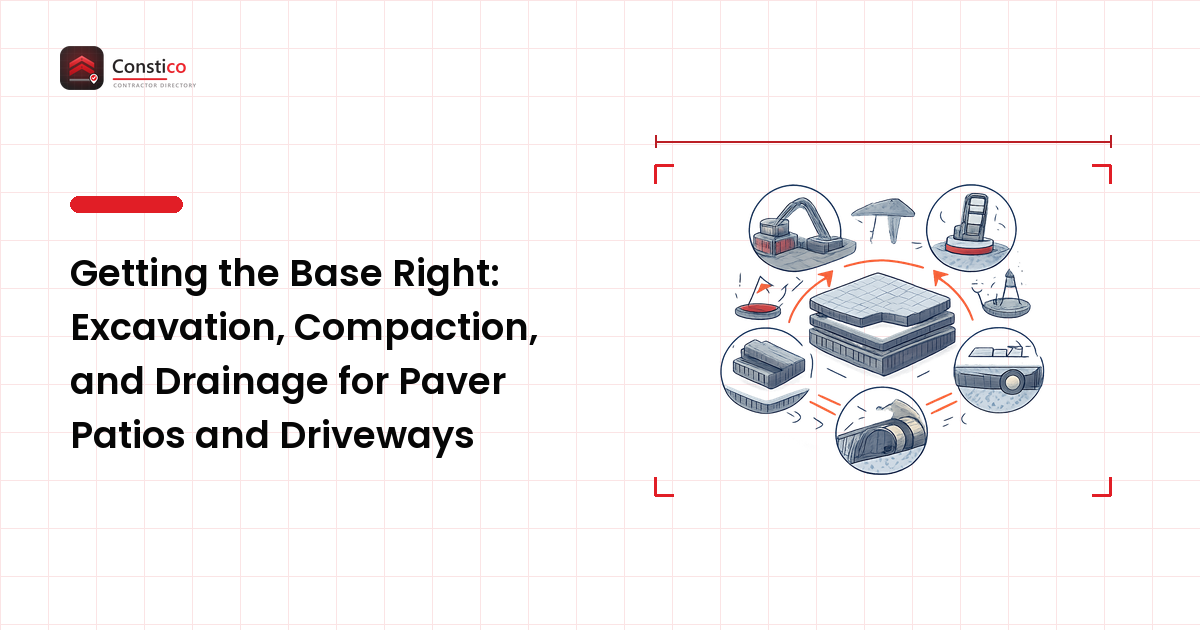
The layers, bottom to top
Built in order, each layer earns its place:
- Subgrade — the native soil at the base of the excavation, graded and compacted so everything above sits on firm, even support.
- Geotextile fabric (often) — a separation layer that stops subgrade and base mixing. On clay it is close to essential; skip it and the base pumps down into the mud.
- Base aggregate — crushed, angular stone in a mix of sizes so it locks together. This is the structural layer, placed and compacted in lifts (thin passes), never all at once.
- Bedding layer — a thin, screeded bed the pavers set into, not a levelling course; a lumpy base cannot be fixed with thick sand, which just compresses later.
- Pavers and joint filler, held by a solid edge restraint.
Compaction: the step people skip
Compaction is where good and bad installs diverge, because it is invisible once finished. The rule that separates a lasting base from a failing one is compact in lifts: a plate compactor only densifies a limited depth per pass, so the base goes down in thin layers, each compacted before the next — and the subgrade compacted before any base at all. A base "compacted" in one thick pour is firm on top and loose underneath, and that loose part is what settles under your pavers — the single most common corner cut.
Drainage and slope: move water off, and out
Water has to leave, and it leaves two ways. Surface slope sheds it off the top: the surface is pitched a small, consistent amount away from buildings so water runs off instead of pooling. Too flat and it puddles; slope it the wrong way and you channel rain at your foundation. Sub-surface drainage handles what soaks through the joints — a free-draining base lets that water move away, and on wet or clay sites that often means a drainage path or perforated pipe designed in rather than hoped for. Where that runoff ends up can also run into stormwater rules.
Where permits and codes come in
Hardscape is not automatically permit-free. Whether you need approval depends on where you build, and the usual triggers are size, drainage and impervious-surface limits, proximity to the property line, and any driveway approach onto a public street — and many jurisdictions cap how much of a lot can be impervious, which a large paver driveway can hit.
The safe move is the same as any build: describe the scope to your local building or planning department and get a written answer before you dig. Our building permit walkthrough covers how that runs, and our construction project guide makes the wider case for treating hardscape as a real project, not a weekend job.
DIY or bring in a specialist?
A small patio on good soil is within reach of a capable DIYer who rents a plate compactor and respects the lifts. It changes fast with a driveway, poor soil, or a drainage problem — where base errors are most likely and most expensive to undo, and worth handing to people who build bases daily.
For Bay Area and Livermore, California readers weighing that call, Pavers and Turf by O'Neill's is a regional landscaping and hardscaping specialist whose work — pavers, driveways, patios, pool decks, retaining walls — lives or dies on exactly the excavation, compaction, and drainage this guide is about, which makes base quality a fair thing to ask them to walk you through. Either way, vet on evidence: the same contractor-vetting checklist applies, asking any hardscaper to explain their base build tells a careful one from a fast one, and the base is the line item to budget honestly.
FAQ
Can I lay pavers over compacted sand instead of a stone base?
No — sand is a bedding layer, not a base. A thick sand layer compresses and shifts under load, which is what causes ruts and dips. Pavers need a compacted crushed-stone base beneath a thin sand bed: the stone does the structural work, the sand only sets the pavers.
Do I need a permit to install a paver driveway or patio?
Sometimes — it depends on size, drainage and impervious-surface limits, distance to property lines, and whether you alter a driveway approach onto a public street. Your local building or planning department gives the reliable answer; get it in writing before you excavate.
What is the most common reason paver installations fail?
Inadequate base preparation — usually shortcut compaction and poor drainage. When aggregate is placed too thick to compact, or water sits under the surface, the pavers settle and heave. The surface gets blamed; the base is almost always the cause.
Next step
Pin down the base before the paver colour: the right soil, the right excavation depth for the load, compaction in lifts, and slope and drainage that carry water away — then confirm whether you need a permit before the first dig. For a driveway, difficult ground, or a drainage problem, Bay Area and Livermore readers can talk to Pavers and Turf by O'Neill's about the excavation and drainage plan; and where local codes or soil are in play, confirm the specifics with your building department or a qualified pro.