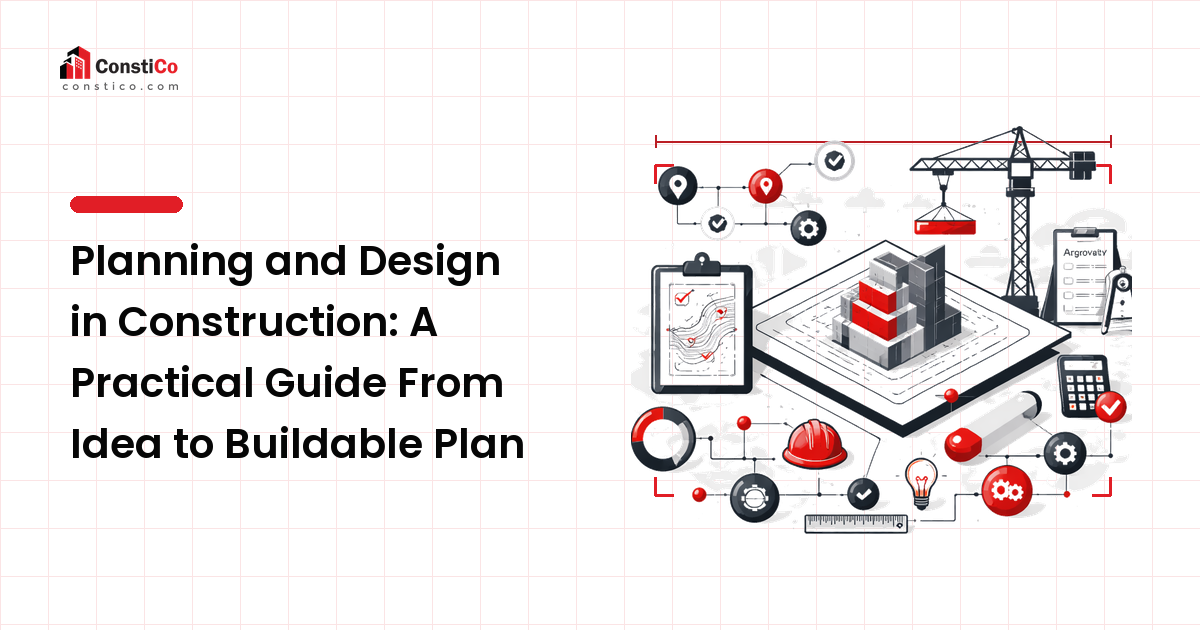
The cheapest place to change a building is on paper. Every decision you push downstream — into permitting, into construction, into a structure that is already standing — costs more to alter than it would have during planning and design. This is the phase where an idea becomes a buildable plan, where most of a project's cost and risk are quietly locked in, and where a few weeks of careful work can save months of expensive correction later.
The short version: planning and design is not the slow part before the "real" work begins — it is where the project is actually decided. Understand the site, make design choices with their trade-offs in view, confirm what local codes and permits allow before you commit, and bring in licensed professionals where the law and the stakes require them. Get this phase right and construction becomes execution rather than improvisation.
Design choices are also where future inspections are won or lost — a plan that ignores code is a plan that fails inspection. It helps to know in advance what inspectors check so the design anticipates it rather than colliding with it later.
Start with a proper site assessment
Every design decision rests on what the site will actually allow, so the work begins with understanding the ground you are building on — not the building you imagine on it. Skipping or rushing the site assessment is how projects discover expensive surprises after money has been committed.
A thorough assessment looks at several things that directly shape what is feasible and what it will cost:
- Soil and ground conditions, which determine the foundation type and can change the budget significantly. Poor or unexpected soil is a classic source of cost overruns.
- Topography and drainage — how the land slopes and where water goes affects layout, foundations, and the risk of future water problems.
- Existing structures and utilities on or near the site, including what must be removed, protected, or connected to.
- Access and constraints — how materials and equipment reach the site, and any boundaries, easements, or environmental limits.
The assessment is not paperwork for its own sake. It is the reality check that keeps the design grounded in what the site can support. Designing first and assessing later risks drawing a building the site cannot hold.
Move through design in stages
Good design does not jump straight to final drawings. It moves through stages, each one resolving more detail, so that big decisions are made — and can be changed — before the expensive detail is committed. Working in stages keeps changes cheap and decisions deliberate.
The phase typically progresses through a few recognizable steps:
- Concept and feasibility — rough ideas tested against the budget, the site, and what regulations allow. The goal is to confirm the project makes sense before investing in detail.
- Schematic design — the layout, size, and general form take shape: how spaces relate, where the building sits, the overall scale.
- Design development — materials, systems, and key details get decided, and the design becomes specific enough to cost more accurately.
- Construction documents — the detailed drawings and specifications that builders price and build from, and that permits are issued against.
The discipline is to resolve the big questions early and the details later. Changing the layout during schematic design is a conversation; changing it once construction documents are drawn — or worse, once the foundation is poured — is a costly redo.
Understand permits and approvals before you commit
Permits are not a formality to handle at the end — they shape what you are allowed to design in the first place. Building codes, zoning rules, and local regulations set hard limits on what can go where, how tall, how close to boundaries, and to what standard. Designing in ignorance of them risks drawing something that simply cannot be approved.
A few realities worth building into the plan early: confirm zoning and land-use rules for the site before finalizing the design, because they can rule out an intended use or size; expect that approvals take time and build that time into the schedule rather than treating it as a surprise; and understand that codes vary by jurisdiction, so what is allowed in one place may not be in another. Because rules differ locally and change over time, this is an area to verify with your local authority and a qualified professional rather than to assume. The cost of confirming what is permitted is trivial next to the cost of designing something that gets rejected.
Work effectively with architects and engineers
For anything beyond the simplest project, design involves licensed professionals — and knowing who does what helps you brief them well and spend their time wisely. An architect typically leads the overall design, spaces, and aesthetics; structural, mechanical, electrical, and civil engineers handle the systems and the structure that make the design safe and functional. Many jurisdictions require licensed professionals to design and stamp drawings for structural and life-safety work, so this is not optional where the rules demand it.
You get better results from these professionals by giving them what they need: a clear brief of what you want and what it is for, an honest budget so they design within it rather than over it, and your priorities ranked so trade-offs go the way you would choose. Be candid about constraints early — a designer who knows the real budget and the real deadline designs to them, while one kept in the dark designs something you then have to walk back. Treat them as partners in solving the problem, not as a cost to minimize at the expense of getting the design right.
A practical planning-and-design checklist
To take a project from idea to a plan you can actually build:
- Assess the site first — soil, drainage, access, and constraints — before committing to a design.
- Confirm zoning, code, and permit limits early, verifying with the local authority rather than assuming.
- Design in stages, resolving big decisions before expensive detail.
- Engage the right professionals and brief them with a clear scope, honest budget, and ranked priorities.
- Cost the design as it develops, so the budget is checked against reality at each stage, not just at the end.
- Anticipate inspection and construction in the design, so the plan is buildable and approvable, not just attractive.
Work through it deliberately and construction starts from a plan that has already absorbed the hard questions. Because requirements and costs vary by location and project, treat these as steps to confirm locally, not fixed rules.
Frequently asked questions
Why is the planning and design phase so important?
Because most of a project's cost and risk are decided here, and changes are far cheaper on paper than in the field. A well-planned design prevents the expensive surprises and rework that derail projects. Time spent resolving decisions during design routinely saves far more time and money during construction.
What does a site assessment involve?
It examines soil and ground conditions, topography and drainage, existing structures and utilities, and access and site constraints. The purpose is to understand what the site can actually support before designing for it. Soil conditions in particular can significantly affect foundation type and overall cost.
Do I need an architect for my project?
For anything beyond very simple work, professional design adds significant value, and many jurisdictions legally require licensed professionals to design and stamp structural and life-safety drawings. Whether one is required depends on your project and local rules, so confirm with your local building authority rather than assuming.
When should I deal with permits?
Early — before finalizing the design, not after. Zoning and building codes limit what you can design, and approvals take time. Confirming what is permitted at the start prevents designing something that cannot be approved, and building approval time into the schedule avoids costly delays later.
How long does the planning and design phase take?
It varies widely by project size, complexity, and local approval processes, so there is no single answer. Rushing it to "get to construction" is usually a false economy, because unresolved decisions resurface as expensive changes later. Plan realistic time for design and approvals, and confirm typical timelines with local professionals.
Next step
Before you commit to a design or a budget, do two things: get a proper site assessment so the plan is grounded in what the ground will support, and confirm with your local authority what zoning, code, and permits will actually allow. Those two checks are the cheapest place in the whole project to change your mind. From there, design in stages, brief your professionals honestly, and you reach construction with a plan that is buildable, approvable, and far less likely to surprise you — and always verify the specifics with a licensed professional and your local code.