When an air conditioner starts misbehaving, the timing is rarely kind — it tends to be the first genuinely hot stretch of the year, with the unit running flat out against heat, dust, and humidity. Knowing what a symptom actually means, and whether it's a two-minute self-check or a real fault, saves you a stressful wait and often a bigger bill.
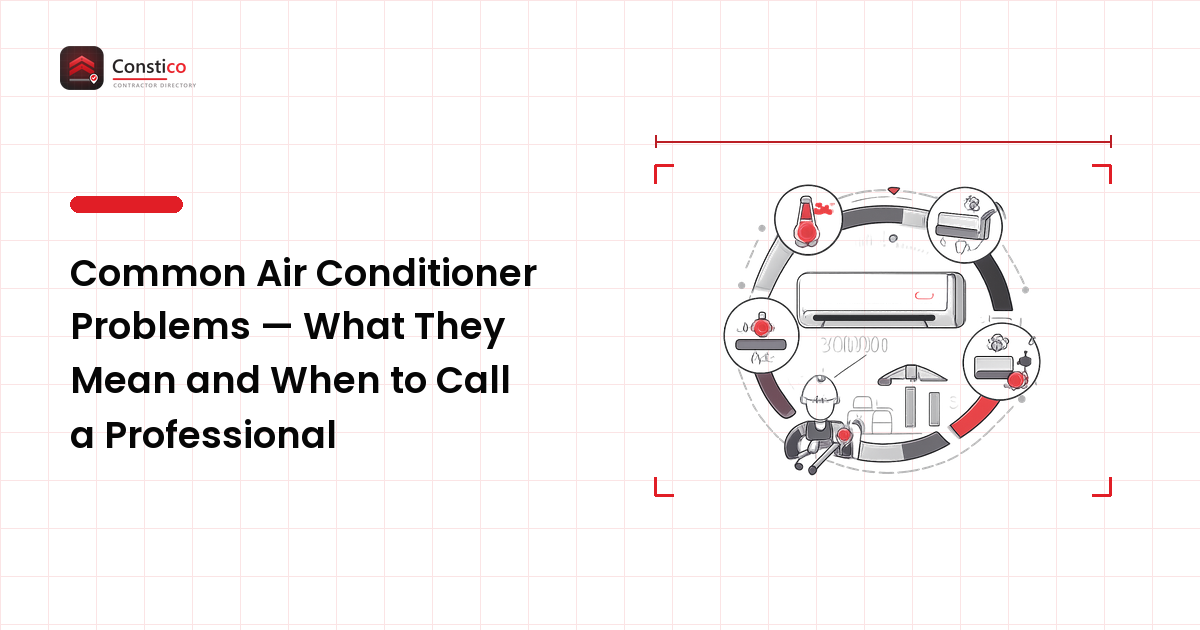
The takeaway up front: almost every household and small-building AC complaint falls into five families — not cooling, weak airflow, water leaks, odd noises, and bad smells. A few have simple causes you can rule out in minutes; the rest point to a fault that is far cheaper to fix early than to leave running through a whole cooling season. This guide draws a clear line between what any owner can safely check and what belongs with a qualified professional.
When the AC runs but the room won't cool
This is the most common complaint of the year and the most misread. The unit is clearly on — you can hear it, air is moving — but the room stays warm. The cause is usually one of a handful of things, and they split neatly into "check it yourself" and "call someone."
Quick things to rule out first
Before assuming the worst, run through the basics. They resolve a surprising share of "not cooling" calls:
- Thermostat settings. Confirm it's on cool, not fan, and set below room temperature. It's an easy thing to knock in a busy household or a shared office.
- The air filter. A filter choked with fine dust is the most common reason cooling drops off. Slide it out and look — if it's grey and matted, clean or replace it and give the unit an hour to recover.
- Blocked vents and returns. Furniture, curtains, or a stacked cupboard across a supply or return grille can starve the whole system of the airflow it needs.
- The outdoor unit. Check that the condenser isn't smothered in dust, packed against a wall, or sitting in dead air. It needs clear space to dump heat, and on a rooftop or balcony it collects grime fast.
What usually needs a professional
If the filter is clean, the thermostat is right, and the room still won't cool, the likely causes move out of DIY territory: low refrigerant from a slow leak, an evaporator or condenser coil that dust has caked over, a tired compressor, or a unit that has simply aged past keeping up with peak load. Low refrigerant is not a "top it up and forget" job — refrigerant isn't consumed in normal use, so if the charge is low, there's a leak to find and seal. These faults need a technician's tools and training, and are worth addressing quickly: a unit fighting a fault runs hotter and longer and shows on your energy bill every day.
Weak or dropping airflow
Sometimes the air is cold enough but there's barely any of it — a thin, weak stream where there used to be a strong one. Weak airflow and weak cooling often travel together, but the airflow side has its own usual suspects.
A clogged filter is again the first thing to check, because dust builds up faster than most people expect. Beyond that, a dirty blower wheel, a partially blocked or leaky duct run, a collapsed flexible duct, or a failing indoor fan motor can all throttle the flow. If you've cleaned the filter and cleared the grilles but airflow is still poor, that points inward — to the blower or the ductwork — and is a job for a professional who can open the unit up safely. Persistent weak airflow is worth taking seriously: it makes the system work harder for less comfort, and it often hides a coil that is quietly icing up.
Water dripping or leaking from the indoor unit
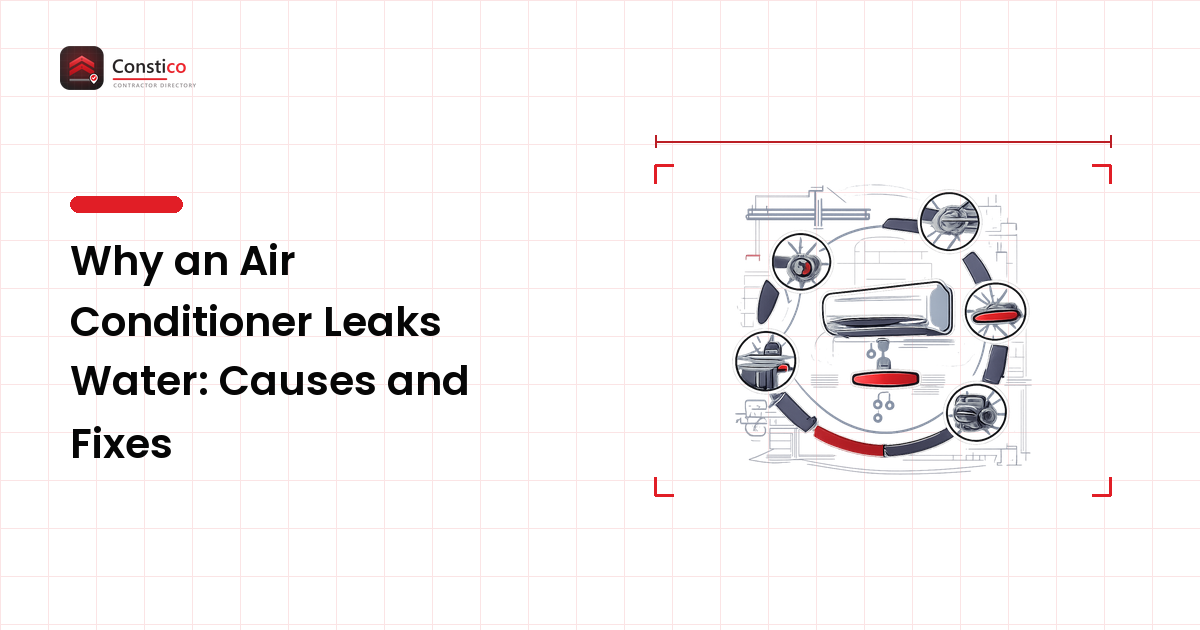
Water marks on the wall under an indoor unit, or actual dripping, are common — and they deserve prompt attention, because water is one of the fastest ways an AC fault turns into building damage. An air conditioner pulls a lot of moisture out of humid air, and all of it is meant to run away down a condensate drain. When that goes wrong, the water has to go somewhere else.
The usual causes are a blocked condensate drain (humidity plus fine dust makes a sticky sludge that clogs the line), a drain pan that has rusted or shifted, a disconnected or badly sloped drain pipe from a rough install, or a frozen coil that's now thawing — often itself the result of a dirty filter or low refrigerant restricting airflow. A little condensation on the outside of pipes is normal in humid conditions; a steady drip or a spreading damp patch is not.
Treat active leaks as urgent, especially in a multi-storey building where water can reach the space below. Damp compounds quickly — it stains, grows mould, and can undermine finishes long before you see the full extent. A leak only gets more expensive the longer it runs, so it belongs near the top of the fix-it list.
Strange noises and what they signal
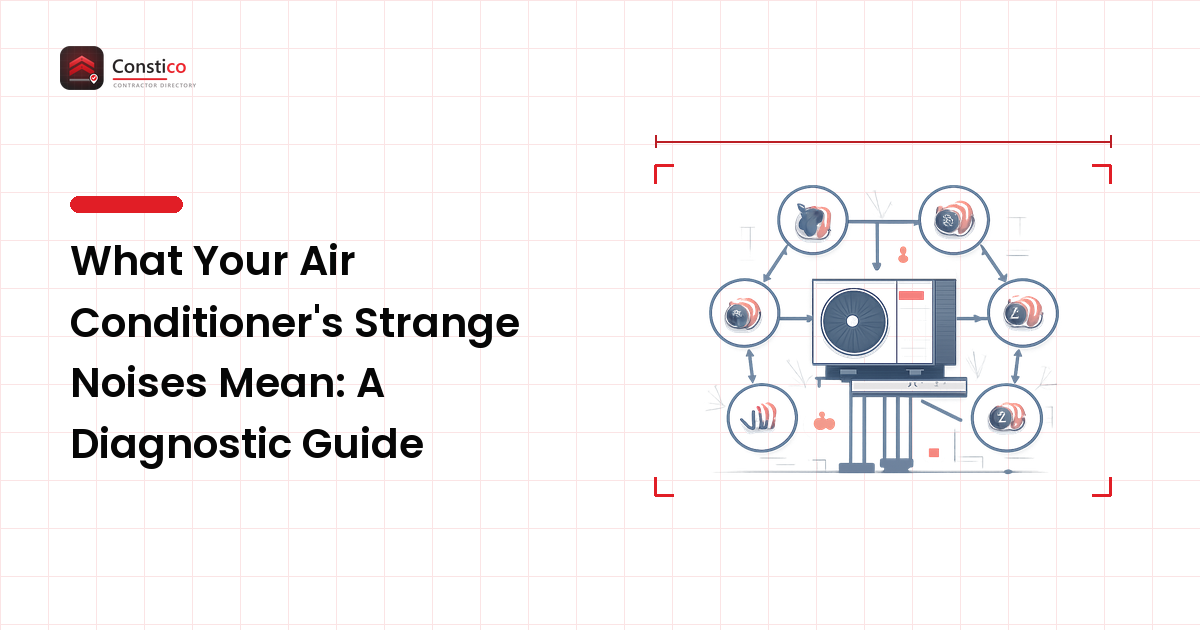
A healthy AC has a steady, familiar hum. New noises are the unit telling you something has changed, and the type of sound is a useful clue:
- Rattling or buzzing panels often mean a loose cover, a screw that has backed out, or debris caught in the outdoor fan — sometimes minor, but worth a look before it works something else loose.
- Electrical buzzing — a persistent hum from the unit or a wall control that doesn't match the normal running sound — should be treated seriously. Electrical faults are the category where the risk goes beyond cost, and they don't belong on a "wait and see" list. The same honest-symptom logic applies to flickering or buzzing lights, covered in why LED lights flicker.
- Grinding or screeching usually points to a motor bearing or a compressor struggling — a genuine mechanical fault that gets worse, and more expensive, the longer it runs.
- Clicking that won't stop, rather than the single click of the unit cycling on, can indicate a control or relay problem.
- Gurgling or hissing can relate to the condensate drain or, in some cases, refrigerant — both worth having checked.
Rattles you can sometimes trace to an obvious loose panel. Anything that sounds electrical, mechanical, or persistent is a call, not a fix.
Bad smells from the vents
Odours coming through the vents are common and mostly point back to moisture. A musty, damp smell usually means mould or bacteria growing on a wet coil or in a clogged drain — a humidity problem, and a reason coil and drain cleaning matter. A stronger dirty-sock smell is the same story, further along.
Two smells change the rules. A burning or hot-plastic smell can mean an electrical or motor problem — switch the unit off at the wall and have it checked rather than run it. A sharp chemical smell is rarer but worth reporting promptly. Bad odours aren't only unpleasant; where an AC runs most of the day, indoor air quality matters, and the cause is usually worth cleaning or checking regardless.
Short-cycling and a tripping breaker
Two related symptoms round out the list. Short-cycling — the AC switching on and off every few minutes without properly cooling — stresses the system and can stem from a range of causes, from a dirty coil to a control fault or a unit that's the wrong size for the space. It's best diagnosed rather than lived with. A tripping breaker is more serious: if the AC keeps knocking out its circuit, resist the urge to simply keep resetting it. A breaker that trips is doing its job, protecting against an overload or fault, and repeatedly forcing it back on invites real risk. That one is a stop-and-call.
When it's safe to check yourself — and when to stop
A clear line keeps you both comfortable and safe. It's reasonable to check the thermostat, clean or swap the filter, clear furniture off vents and returns, and make sure the outdoor unit has room to breathe. Those are the everyday checks any owner can do.
Stop and call a professional the moment you meet anything electrical — buzzing, a burning smell, warm or discoloured controls, or a tripping breaker — anything involving refrigerant, a leak you can't trace to a simple blocked drain, or a lack of cooling that survives the basic checks. The honest rule of thumb: if a fault touches electricity, water reaching the building, or cooling that won't return after a filter change, it's cheaper and safer to have it looked at soon than to wait for it to fail at peak summer.
Preventing the next breakdown
Most of the faults above share a root cause — a system running hard through heat, dust, and humidity without a regular check. The single most effective habit is a proper service before the cooling season, plus a monthly filter look during the hottest months, so small problems get caught while they're still small. Planned upkeep is not an extra cost; it's how you avoid the badly-timed, expensive version of every problem on this page. And when a repair does cross into professional territory, weigh more than one quote — how to compare contractor quotes shows how to read bids line by line rather than chasing the lowest number.
FAQ
Why is my AC running constantly but not cooling?
Usually a clogged filter or dirty coil, low refrigerant from a leak, or a unit that has aged past keeping up with peak heat. Clean the filter and confirm the thermostat is on cool first; if it still won't cool, it needs a technician, because a unit fighting a fault also burns extra electricity every day it runs.
Is a small water leak from the indoor unit urgent?
Treat it sooner rather than later, especially where water can reach a unit or space below. It's often just a blocked condensate drain, but damp spreads and stains fast, so clearing it early is far cheaper than repairing a wall or ceiling afterwards.
My AC smells musty when it starts — is that dangerous?
A musty smell usually means mould or bacteria on a damp coil or in a clogged drain — unpleasant and worth cleaning, but not an emergency. A burning or hot-plastic smell is different: switch the unit off and have it checked, as it can point to an electrical or motor fault.
Should I keep resetting the breaker if the AC keeps tripping?
No. A breaker that keeps tripping is protecting against a fault or overload, and repeatedly resetting it invites real risk. Leave it off and have the cause checked by a qualified professional.
Which AC problems can I safely check myself?
The thermostat setting, the air filter, blocked vents and returns, and clear space around the outdoor unit. Anything electrical, any refrigerant issue, a leak you can't trace to a simple drain, or cooling that won't return after those checks belongs with a technician.
Get it diagnosed before it grows
If your AC is showing any of these signs, the smartest first step is a straight diagnosis, not a guess — the sooner a fault is found, the smaller the fix. Once a symptom crosses into refrigerant, electrical, or water reaching the building, it's a job for a licensed HVAC professional. Compare qualified, vetted pros and see what the work should cost at Constico.