Buildings fail slowly, and then suddenly. The roof membrane that lifted in last winter's wind does nothing dramatic for months — until a storm finds it, saturates the insulation, stains three ceilings, and turns a modest repair into a claim. Nearly every expensive building failure tells the same story: a small, visible, cheap-to-fix problem that was allowed to compound.
Maintenance is the discipline of interrupting that story early. This guide is the owner's map of the whole territory: what actually ages a building, which parts of it deserve attention first, how to choose between fixing on a schedule and fixing on failure, the warning signs worth acting on, and how to triage when several repairs compete for the same budget. Where a topic deserves its own full guide, we link it — the aim here is that you can see the whole board before you spend on any one square.
The forces that age a building
A building is attacked by remarkably few things, and knowing them turns a vague worry ("is the building okay?") into specific checks.
Water, above everything. Rain through a failed roof detail, splash-back at ground level, leaking pipework inside walls, condensation from daily living, rising moisture from the ground. Water is behind more structural decay, finish damage, mould, and electrical hazard than every other cause combined. When in doubt about where a maintenance hour should go, follow the water.
Movement. Structures move — with temperature, with seasonal ground moisture, with settlement. Most movement is normal and the building is designed for it; some is not. The skill is telling the two apart early, which is why cracks get their own section below.
Wear and cycling. Everything mechanical is consuming its lifespan every day it runs: pumps, lifts, air conditioning, door hardware, valves. Wear is the most predictable force of all, which is exactly why it responds so well to scheduled servicing.
Neglect's compounding interest. The fourth force is the multiplier on the first three. A blocked gutter is trivial; the saturated wall below it, the corroded fixings inside, and the redecoration afterwards are not. Deferred maintenance is not saved money — it is borrowed money, at a punishing rate.
The owner's map: envelope, systems, finishes
Every element of a building falls into one of three layers, and the layers have a natural priority order — not because any of them is unimportant, but because failures flow downhill from the outside in.
The envelope — roof, external walls, windows, doors, and the drainage that carries water off and away — is the building's raincoat. Every envelope failure eventually becomes a failure somewhere else: in the structure, the services, or the finishes. This is why envelope items top any rational maintenance list, and why gutter clearing, roof inspection, sealant checks, and external drainage belong on a calendar rather than a someday list.
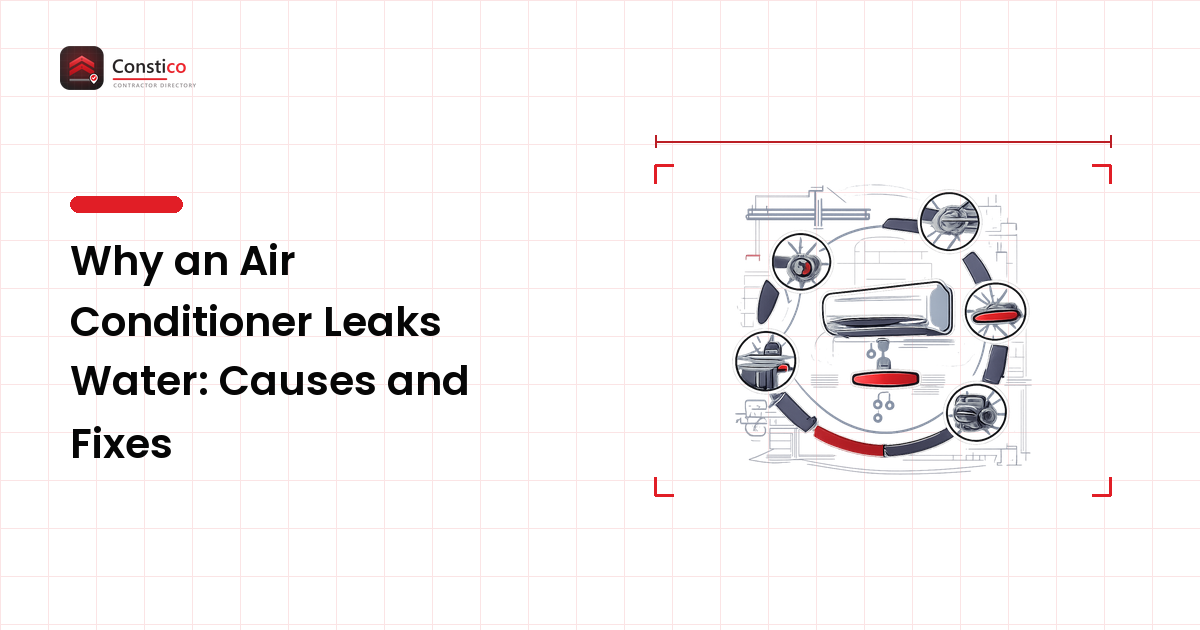
The systems — electrical, plumbing, air conditioning and ventilation, fire safety equipment, lifts — are what make the building usable and safe. They combine steady wear with real safety stakes, so they carry the most non-negotiable schedules: fire systems and anything life-safety related get serviced on their prescribed rhythm, full stop. Mechanical plant rewards regular servicing more visibly than anything else in the building — air conditioning is the classic case, and how often to service an AC system, and what a proper service covers shows what that rhythm should look like.
The finishes — paint, flooring, tiling, joinery — are what everyone actually sees, which is precisely their danger: they attract budget ahead of the layers that protect them. Repainting a water-stained ceiling before fixing the leak above it is the signature move of maintenance done backwards. Finishes last longest, and cost least, when the two layers above them are sound.
Schedule it, or wait for the phone call
The deepest choice in maintenance is not what to fix but when you find out: on a calendar you control, or in an emergency you don't. Reactive maintenance — run it until it breaks — looks cheaper because the quiet months cost nothing. Planned maintenance costs money while everything seems fine. Over a building's life, the comparison is not close, once emergency call-out premiums, collateral damage, downtime, and shortened equipment life are counted honestly. We walk through that comparison properly in planned vs reactive maintenance.
The honest nuance is that nobody plans everything. Low-consequence items — a bathroom tap washer, an interior door closer — can reasonably run to failure. The rule of thumb: the higher the consequence of failure, the stronger the case for a schedule. Anything whose failure causes water damage, safety risk, or business interruption earns a calendar entry.
Deciding to plan is the easy half. Turning that intent into an asset list, sensible intervals, and a calendar someone actually follows is a build project of its own, and how to build a preventive maintenance plan and calendar walks through it step by step — asset register first, then task schedule, then records.
Warning signs: what the building is telling you
Between scheduled visits, buildings announce their problems — quietly, and usually in one of these dialects.
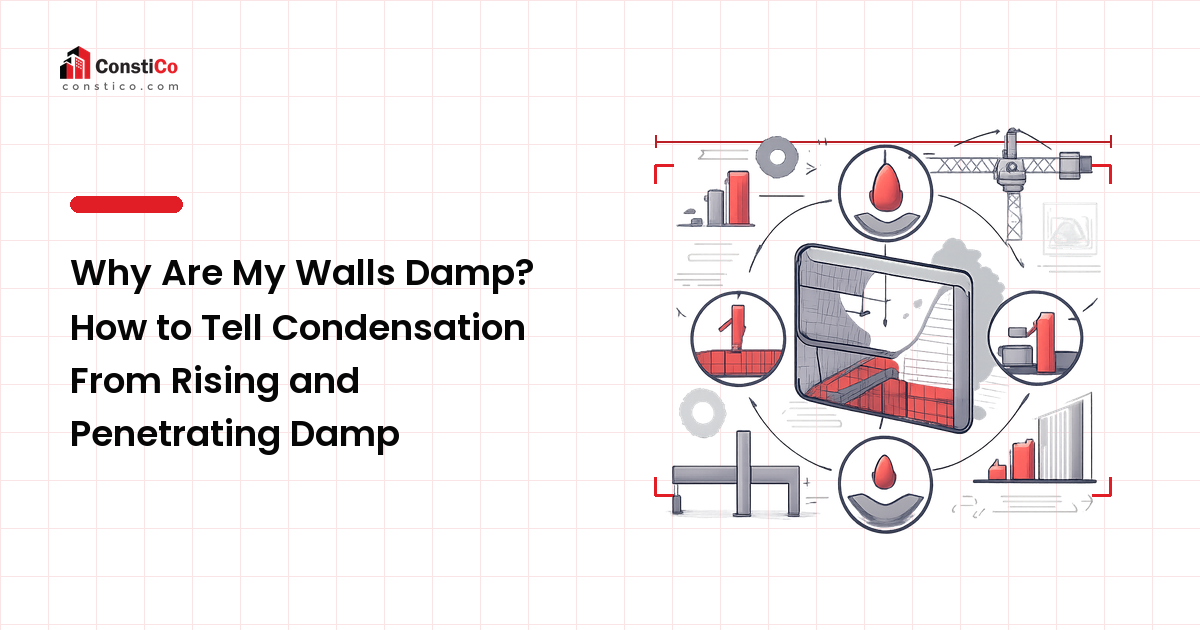
Damp and staining. A damp patch is never just cosmetic; it is evidence of water arriving somewhere it shouldn't, and the pattern tells you the source — condensation behaves differently from rain penetration, which behaves differently from moisture rising through the base of a wall. Diagnosing before treating matters, because the remedies differ completely: how to tell condensation from rising and penetrating damp covers the reading.
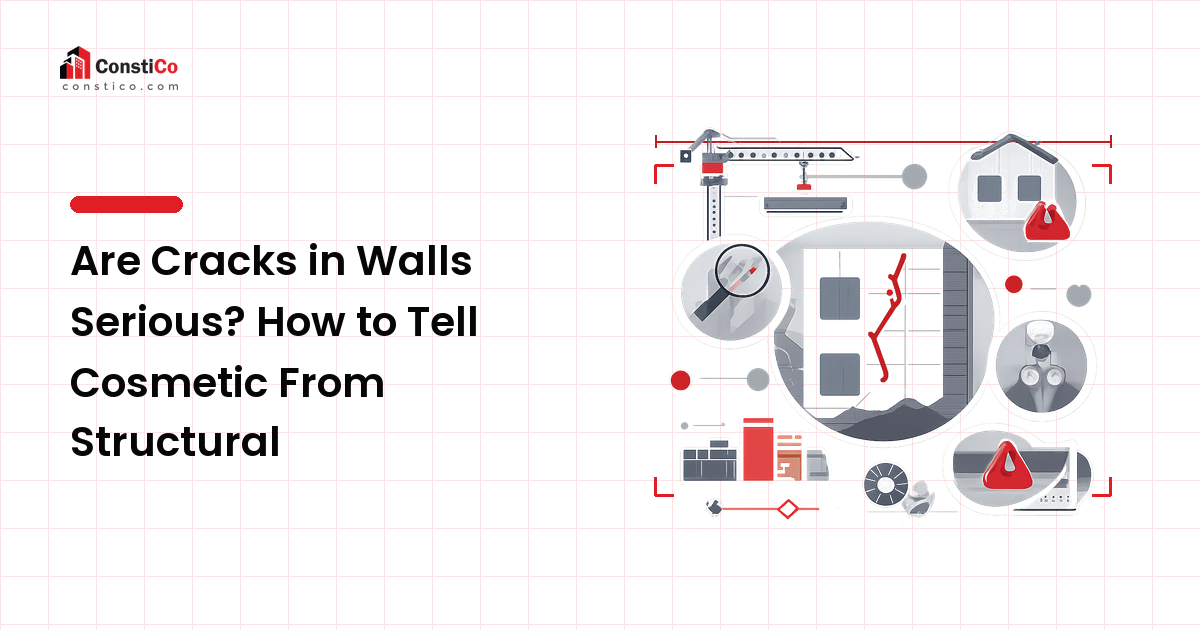
Cracks. Most are the harmless signature of normal movement and drying; a minority signal something structural. Width, pattern, location, and — above all — whether a crack is changing separate the two. How to tell cosmetic cracks from structural ones gives the framework, including when monitoring is enough and when an engineer should look.
Noise, smell, and bills. Mechanical plant rarely fails silently: bearings grumble, drains smell, energy bills drift upward as equipment loses efficiency. Treat "it's been sounding different lately" from occupants as data, not complaint — the people inside a building are its most sensitive monitoring system, and a simple way to report problems is one of the cheapest maintenance tools there is.
The habit that ties this together is the periodic walk-around: same route each time, roof to drains, eyes on the known weak points, photos of anything questionable so next quarter's comparison is fact rather than memory.
Who does the work
Small portfolios usually run on a trusted handyman plus specialist trades on call; that works until the day the one person who knows the building is unavailable. Larger or busier buildings typically weigh an annual maintenance contract, which trades a fixed fee for scheduled visits and defined response times — genuinely valuable if the contract is scoped well, and a source of quiet disappointment if it isn't. What an AMC should cover, the exclusions to check, and how to compare offers fairly is covered in how to choose an annual maintenance contract.
Whoever does the work, two disciplines matter more than the org chart: every visit gets recorded (what was found, what was done, what was deferred), and safety-critical work goes only to licensed trades. Electrical, gas, structural, and fire-system work are not places to economise on qualifications — and local code requirements on servicing and certification are the floor, not a target.
And when you need an independent picture rather than a repair — before buying, after a serious defect, or because the building has drifted for years without records — a professional survey resets your knowledge to facts. What inspectors check and how to read the report explains what that buys you.
Fix-first triage: when everything competes
Every owner eventually faces a list longer than the budget. Triage by consequence, in this order, and the decisions mostly make themselves:
- Safety hazards — anything electrical, fire-related, structural, or a falling/trip risk. These are not queued; they are done.
- Active water entry — a leaking roof, pipe, or drain is compounding daily. Stopping the water outranks repairing what it has already damaged.
- Structural and envelope repairs — the raincoat and the skeleton, before anything that merely sits inside them.
- System reliability — the plant whose failure would stop the building working or start the emergency-spend cycle again.
- Finishes and appearance — last, and gladly, because done in this order the redecoration only happens once.
The test for any tempting cosmetic fix: is the cause above it resolved? If not, the repaint is not maintenance — it is concealment with a short shelf life.
FAQ
How often should a building get a full maintenance inspection? A structured walk-around several times a year, plus seasonal checks of roof and drainage before the demanding weather arrives, suits most buildings. Add a professional survey when age, defects, or missing records raise the stakes.
Is it worth maintaining a building I plan to sell? Usually, yes — visible neglect discounts a sale price by more than the deferred works cost, and a documented maintenance record is one of the few ways a seller can prove condition rather than assert it.
What is the single most cost-effective maintenance task? Keeping water moving off and away from the building: clean gutters, clear drains, intact roof details and sealant. It is unglamorous, cheap, and prevents the most expensive category of damage there is.
Can I run maintenance without dedicated software? Yes. A spreadsheet asset list, a shared calendar, and disciplined records will run a small building perfectly well. Software earns its keep when assets, sites, or contractors multiply — the discipline has to exist first either way.
When does a defect stop being a maintenance issue and need an engineer? When it is structural in nature, changing over time, or beyond confident diagnosis — a widening crack, repeated movement, persistent damp that resists an obvious explanation. Paying for the right eyes early is far cheaper than guessing wrong.
A sound building is rarely the one with the biggest budget — it is the one where water is kept out, wear is serviced on schedule, and repairs happen in consequence order. If a project on your list has outgrown routine upkeep, ConstiCo can help you scope, inspect, and manage it properly.